
What happened
The file should identify the event, condition, disruption, or combination of circumstances clearly enough that the decision-maker can understand the real issue without guessing.
Late withdrawal, late discontinuation, special circumstances, and fee-remission style applications often fail for a simple reason. The student has a genuine problem, but the documents do not clearly prove the timing, severity, and academic impact the university is actually testing.
The safest document set usually includes the decision or application context, the policy criteria, a dated chronology, medical or third-party evidence tied to the relevant period, records showing academic impact, and any material explaining delay if the application is outside the ordinary timeframe. Each document should do a clear job. If the file is just a pile of distress evidence with no explanation of timing or unit impact, it is often still too weak.
The file should identify the event, condition, disruption, or combination of circumstances clearly enough that the decision-maker can understand the real issue without guessing.
Timing is often central. Many late withdrawal and fee-remission style policies test whether the serious impact emerged on or after a census or withdrawal deadline, or whether the student could reasonably have acted earlier.
The strongest documents do not only show distress. They help explain why the unit became impracticable to complete, why performance collapsed, or why the student could not use earlier options effectively.
In these matters, the gap between a sympathetic story and an approvable file is often the gap between general hardship and policy-linked proof. Your documents should help the reader move from sympathy to criteria.
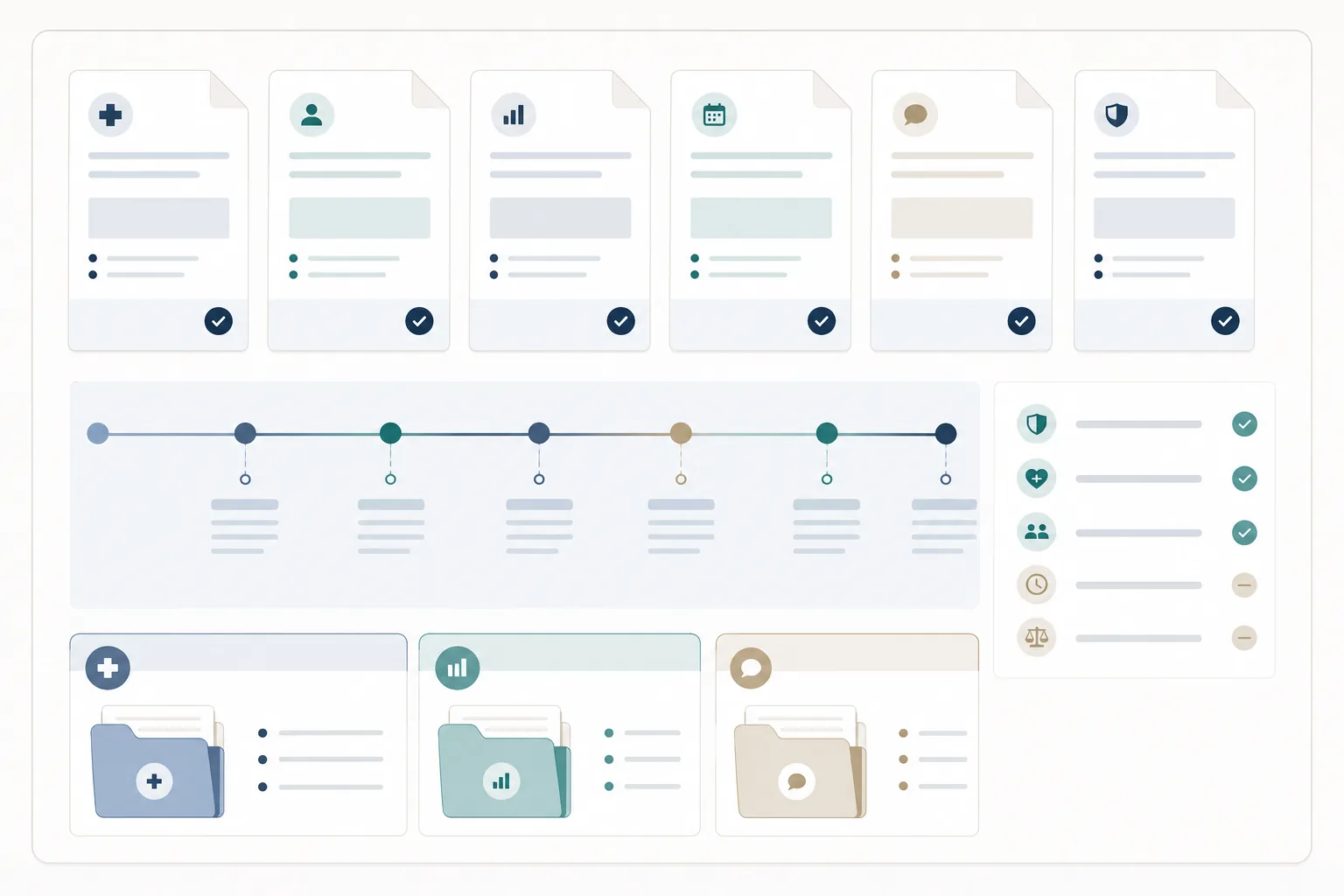
Use this visual as a quick evidence map: start with the policy criteria and timeline, then attach only the documents that prove timing, seriousness, academic impact, or delay. A smaller organised pack is usually stronger than a large bundle with no clear structure.
Keep the application form instructions, refusal email, portal notice, or university guidance page that defines the process you are using. This stops the file drifting into a general fairness argument when the policy is asking a narrower question.
Save the current policy, procedure, or official student guidance page and identify the actual criteria. Different universities use overlapping language, but the wording can still change what you need to prove.
Build a short timeline showing when the issue began, when it worsened, key teaching dates, census or withdrawal dates, assessment impacts, help-seeking steps, and the date the application was filed.
This often includes GP letters, specialist letters, psychologist or counsellor records, hospital material, social worker evidence, police or emergency records, or employer and family support evidence where relevant.
Useful records can include extension emails, special consideration outcomes, attendance issues, missed assessments, subject coordinator correspondence, grade history, or LMS screenshots showing the timing of the breakdown.
If the application is late, keep documents that explain why the filing did not happen sooner. Students often forget that lateness itself may need evidence, not just explanation.
A long personal statement is rarely the strongest first step. In many cases, it is safer to identify the criteria, build the timeline, and sort the documents first. The statement usually becomes clearer once the proof is organised.
The best health evidence usually helps with timing, severity, functional impact on study, and the connection between the condition and the period in dispute. A brief attendance certificate may confirm you saw a doctor, but it may not prove enough on its own.
This can help explain deterioration, persistence of symptoms, treatment engagement, and how the issue impaired study, attendance, concentration, or deadline management during the relevant teaching period.
These records can be especially useful for showing seriousness and timing. They often help anchor the chronology when the university may otherwise view the problem as too general or too distant from the unit outcome.
Emails can prove when you disclosed the issue, what advice you were given, whether you sought extensions or support, and whether the university already knew something serious was happening before results were finalised.
These records help show the academic effect. They can support claims about missed tasks, partial completion, deteriorating performance, withdrawn attempts, or the difference between affected and unaffected units.
Your statement usually ties the file together. It should explain the chronology, identify the core circumstances, connect the evidence to the unit impact, and address any obvious weaknesses such as late filing, unaffected units, or earlier support pathways that did not solve the problem.
The original issue still matters, so keep the records proving what happened and how it affected study during the relevant semester or teaching period.
If the application was not filed within the usual timeframe, the stronger file usually explains why. That may involve ongoing illness, hospitalisation, mental health deterioration, misinformation, delayed awareness of the process, or another evidence-backed reason.
Where the delay is linked to the same underlying issue, a decision-maker may need to see that the difficulty did not end when the semester ended. Continuing treatment or ongoing disruption records can matter here.
Students often improve credibility when the file shows they moved with reasonable speed once capacity returned or once the process became clear.
If your case is late, do not assume the university will infer a good reason from the original hardship alone. The delay point often needs its own short, document-backed explanation.
Start with a simple map of the documents so the reader can move through the file without confusion.
Place the core explanation near the front, but keep it disciplined. The statement should point to documents rather than trying to replace them.
A one-page dated timeline often helps the decision-maker understand the sequence before reading supporting material in detail.
Group records logically, for example health evidence together, university correspondence together, and academic impact records together. This is usually easier to assess than a random stack of attachments.
Where lateness is an issue, keep those documents easy to find rather than burying them deep in the file.
Before filing, ask whether the pack actually answers the criteria on the official page or in the policy. If not, reorganise before submission.
If an attachment is included only because it feels important, but it does not clearly prove timing, seriousness, academic impact, or delay, it may dilute the file.
Many cases weaken because the documents show difficulty, but do not show when the serious impact emerged in relation to the policy deadlines.
Certificates can help, but they may not explain functional impact, severity, or why the unit became impracticable to complete. Additional supporting letters or records often matter.
If you continued performing in other subjects, the file may need to explain why the affected unit or teaching period was different.
Even a strong underlying case can be weakened if the student ignores the separate question of why the application was not made earlier.
Decision-makers should not have to guess how the documents fit together. Short document labels, chronology notes, and a disciplined statement usually help a lot.
The strongest late-withdrawal files usually feel easy to assess. The weakest ones often contain genuine hardship but make the reader do too much work to connect the evidence to the policy test.
The key documents usually prove what happened, when it happened, how serious it was, how it affected study during the relevant period, and why the unit became impracticable to complete or why remission criteria are met under the university's policy.
No. It may help, but many cases also need clearer information about timing, functional impact, treatment, and how the condition affected study after the relevant withdrawal point.
If late filing is still allowed, students usually need to explain both the original circumstances and the delay itself. The reason for lateness often needs evidence too.
Usually not. A smaller, clearly organised evidence pack where each document has a defined job is often stronger than a large bundle that leaves the decision-maker guessing.